
⏱️ Reading time: 4 minutes
When a basement floods, the cause is not always obvious. In Toronto and the GTA, the two most common culprits are sewer backup and sump pump failure, and they need different responses. If you are dealing with standing water now, call +1 (437) 986-2947 for help from North Star Solution.
Knowing the difference matters because the water source, contamination risk, and repair approach are not the same. A quick inspection can help you avoid bigger damage and choose the right fix the first time.
What a sewer backup means
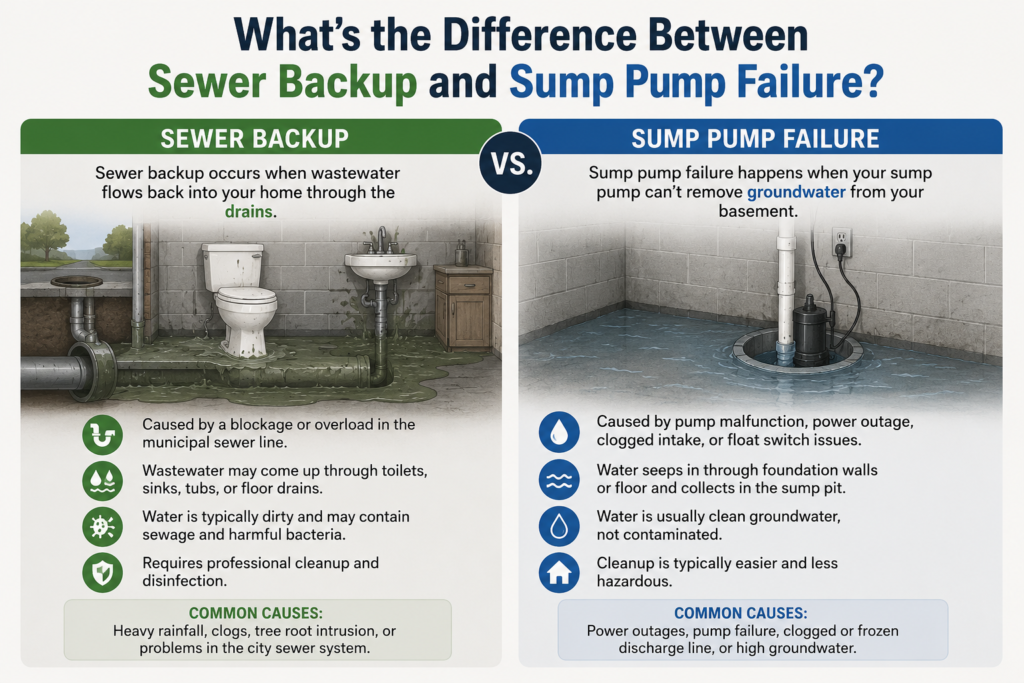
A sewer backup happens when wastewater cannot move away from your home and starts coming back up through drains, toilets, or basement plumbing. The problem is usually tied to a blockage, heavy rain overwhelming the system, or a sewer line issue somewhere in the drainage path.
This is often the more hazardous of the two because the water may contain sewage and other contaminants. If you notice a foul smell, discoloured water, or water rising from floor drains or a toilet, treat it as a sewer backup.
In older Toronto neighbourhoods, sewer lines can also be affected by tree roots, pipe wear, and storm surges that overload the municipal system. If backups happen repeatedly during storms, a plumbing inspection and possible Backwater Valve Installation may help reduce the risk.
What sump pump failure means
A sump pump is designed to move groundwater away from your foundation before it builds up in the basement. When the pump fails, water can collect around the pit and spill into the basement even if the sanitary sewer is working normally.
Common causes include power outages, a worn-out pump, a clogged discharge line, or lack of maintenance. In many homes, the flooding starts after a storm or spring thaw because the pump cannot keep up with the incoming groundwater.
This water is often cleaner than sewage water, but it can still damage flooring, drywall, insulation, and stored items. Regular service, along with Sump Pump Maintenance, can lower the chance of surprise failures.
How to tell them apart fast
If you are standing in a flooded basement, the source can give you important clues. Water coming up through a floor drain, toilet, or shower usually points to a sewer backup. Water coming from around the sump pit or seeping in near the foundation often points to sump pump failure.
- Smell: sewage water usually smells strong and unpleasant.
- Appearance: sewer water is often darker or cloudier.
- Location: sewer backups often appear in plumbing fixtures; sump issues usually start near the pit or basement edge.
- Timing: sewer backups may happen during heavy rain, while sump pump failures often follow power loss or pump breakdown.
If the cause is not obvious, a Drain Camera Inspection can help identify whether the issue is in the sewer line, drain system, or another part of the plumbing.
Why the cleanup approach is different
Sewer backup cleanup needs a higher level of caution because the water can carry bacteria and other harmful materials. Porous items such as carpet padding, insulation, and some drywall may need to be removed rather than dried in place.
Sump pump failure cleanup is usually less contaminated, but fast drying is still important. Even clean-looking water can lead to mold, warped materials, and electrical hazards if it sits for too long.
In either case, avoid using basement plumbing until the cause is known. If the problem is tied to a broader drainage issue, Sewer Backup Repair or Professional Drain Cleaning may be needed to restore normal flow.
How Toronto homeowners can reduce the risk
Prevention is often more affordable than emergency cleanup. A few practical steps can make a major difference, especially in homes with older plumbing or a finished basement.
- Test the sump pump before major storms and after long dry periods.
- Install a battery backup if your area loses power during storms.
- Keep the discharge line clear and directed away from the foundation.
- Do not pour grease, wipes, or debris into drains.
- Schedule drain and sewer maintenance if you have recurring backups.
If your basement has a history of water problems, North Star Solution can also assess whether your drainage system needs repair or an upgrade through Drain System Repair & Upgrade.
Both sewer backup and sump pump failure can flood a basement, but they are not the same problem. Sewer backups involve contaminated wastewater from the plumbing system, while sump pump failures usually involve groundwater that the pump failed to remove. If you need help in Toronto or the GTA, call +1 (437) 986-2947 and contact North Star Solution.
Tags: sewer backup, sump pump failure, basement flooding, Toronto plumber, GTA plumbing, drain cleaning, backwater valve, water damage prevention, drain inspection, emergency plumbing