
⏱️ Reading time: 4 minutes
Your sump pump is one of the most important protections your basement has against flooding. When it starts to fail, the warning signs are often subtle at first, then sudden and expensive. If you notice anything unusual, call +1 (437) 986-2947 or North Star Solution for a prompt inspection in Toronto and the GTA.
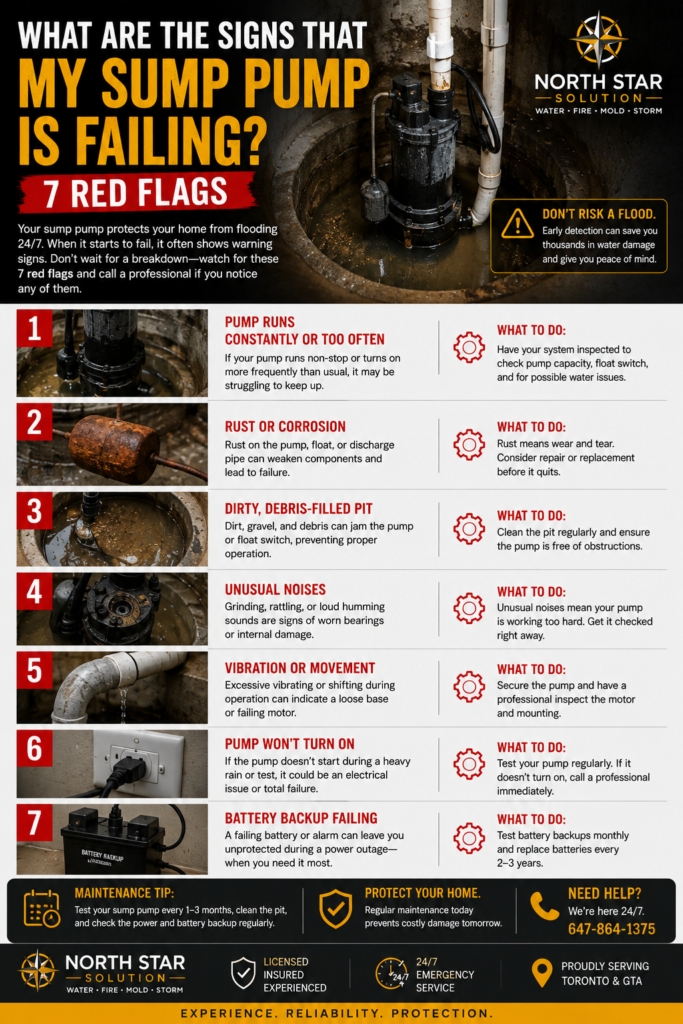
1. Strange noises during operation
A healthy sump pump should sound fairly steady and mechanical, not harsh or erratic. Grinding, rattling, buzzing, or loud humming can point to worn parts, debris in the impeller, or a motor that is struggling.
If the sound changes suddenly, treat it as an early warning rather than something to ignore. Catching the problem now can help you avoid a basement backup later.
2. The pump runs too often or too long
Sump pumps are supposed to cycle on and off as water enters the pit. If yours seems to run constantly, it may be dealing with a stuck float switch, a drainage issue, or a pump that is too weak for the amount of water coming in.
Frequent cycling can also wear out the motor faster. If you hear the unit turning on far more than usual, it is worth having it checked before the next heavy rain.
3. Water stays in the pit or backs up
The main job of a sump pump is to remove water quickly. If water remains in the basin after the pump runs, or if the pit fills faster than the pump can empty it, there may be a blockage, a failing check valve, or a discharge problem.
You may also notice water pooling around the unit or moving back toward the foundation. That is a strong sign the system is not keeping up and should be inspected right away.
4. Rust, corrosion, or visible wear
Rust on the pump housing, fittings, or other components can signal long-term moisture exposure and aging parts. Corrosion may not stop the pump immediately, but it often shows that the system is nearing the end of its useful life.
If you see mineral buildup, flaky metal, or cracked parts, do not wait for a failure. A professional can tell you whether repair or replacement is the safer option.
5. The pump is getting older
Age matters. Many sump pumps last around 7 to 10 years, depending on use and maintenance, but older units are more likely to fail during a storm or power outage.
If your pump is getting up there in age and has never had a proper inspection, it may be time to plan ahead. A replacement is usually much less stressful than dealing with an emergency flood.
6. The float switch seems off
The float switch tells the pump when to start and stop. If it sticks, gets tangled, or sits in the wrong position, the pump may not activate when water rises or may keep running after the pit is already empty.
This is one of the most common causes of sump pump trouble. It is also one of the easiest issues to overlook until the basement starts taking on water.
7. The system sounds weak or performs slowly
If the pump is on but water is draining slowly, that is a warning sign. Weak performance can point to a clogged discharge line, worn internal parts, or a pump that is no longer powerful enough for your home’s needs.
For added protection, many Toronto homeowners pair pump care with services like Sump Pump Maintenance and Drain Camera Inspection. If slow drainage is part of a bigger issue, Professional Drain Cleaning can help restore proper flow.
What to do if you spot one or more red flags
Do not wait for the next storm to test the system again. Check whether the pump is receiving power, listen for unusual operation, and look for standing water, corrosion, or repeated cycling.
- Test the pump by pouring water into the pit.
- Make sure the float moves freely.
- Look for clogs in the discharge line.
- Schedule service if the pump is noisy, slow, or unreliable.
If the pump is failing, quick action can help protect your basement from costly water damage. For dependable help in Toronto and the GTA, contact North Star Solution at +1 (437) 986-2947.
Tags: sump pump failure, sump pump repair, sump pump maintenance, basement flooding prevention, drainage services, Toronto plumber, GTA plumbing, water damage prevention, basement protection